
Fixed Income Reimagined: The Impact Solution to America's Housing Crisis
Why traditional bond yields are failing accredited investors, and how Naturally Occurring Affordable Housing (NOAH) preservation is delivering uncorrelated returns through verifiable social impact.
Institutional Strategy Memo
"It is entirely possible to reshape the flow of capital so that wealth creation and compassion work together. In the impact investing sector, we call this doing well by doing good." — Dr. Canaan Van Williams, Author, The Affordable Housing Multi-Millionaire
| 7M+ Housing Unit Shortage | $23M Portfolio Growth from Single $50k Note | Tier 1 Sustainalytics Verified Impact |
|---|
The global fixed income landscape has reached a critical juncture. For decades, accredited investors and family offices relied on the 60/40 portfolio, assuming public corporate bonds would provide safe, uncorrelated yield. But in today's macroeconomic environment, public credit markets are increasingly saturated, yields are fiercely compressed by institutional demand, and generic "impact" labels have been severely diluted by greenwashing.
Investors are starved for an asset class that provides two things simultaneously: inflation-resistant yield and verifiable real-world impact. This demand has triggered a massive capital migration into impact-focused fixed income — specifically, asset-backed social impact bonds focused on institutionalizing real estate bottlenecks.
The Affordability Gap: An Untapped Yield Engine
The primary economic bottleneck of the decade is not in tech or energy; it is in housing. More specifically, Naturally Occurring Affordable Housing (NOAH). Traditional Wall Street institutions have largely ignored this fragmented market, viewing distressed mobile home parks and legacy extended-stay models as too operationally intensive. This blind spot has created a high-yield opportunity for impact bond investors.
The Market Wall Street is Ignoring
In a recent market breakdown, Dr. Canaan Van Williams explicitly outlined the sheer scale of the supply-demand imbalance in the U.S. housing market. The crisis is no longer confined to low-income earners; it is structurally impacting mid-income professionals, creating a permanent floor of demand for NOAH properties.
By stepping into the void left by mega-funds, fixed-income impact notes are securing highly competitive yields backed by tangible, essential community infrastructure.
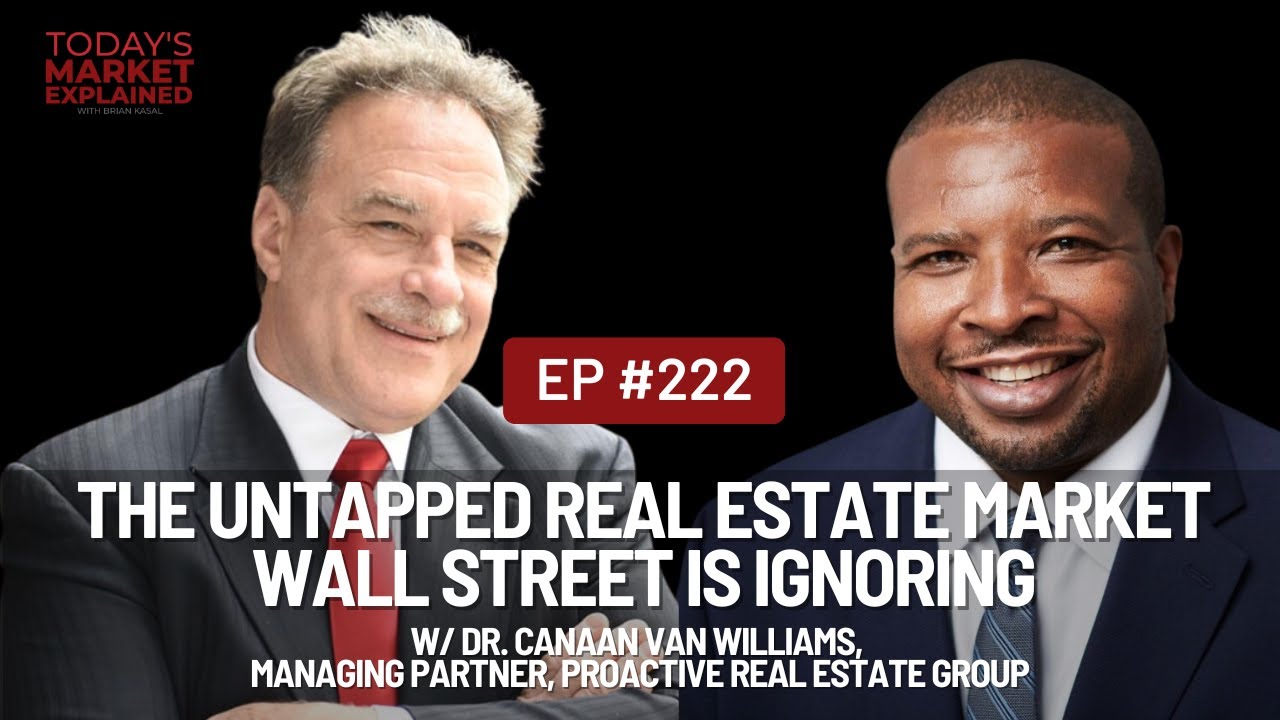
"We are about 7 million housing units short. Not only at the low-income level, but mid-income levels... people making well over $100,000 a year are priced out of the market. It's an untapped space." — Dr. Canaan Van Williams on the NOAH Supply Deficit
Transforming Capital Flow Through Impact Investing
Generic impact investing often relies on "exclusionary screening" — simply refusing to buy bonds from fossil fuel or tobacco companies. This passive divestment does absolutely nothing to solve the housing crisis, nor does it generate alpha for the investor.
Pragmatic impact requires active transformation. When capital is deployed directly into acquiring and rehabilitating distressed NOAH assets, the result is immediate community stabilization and immediate cash flow. This operational model is what allows firms like Proactive Sustainable Bonds to offer reliable yield to accredited investors.
Building Wealth That Builds Communities
Impact investing does not require concessionary returns. Dr. Williams explains how deploying strategic capital can transform a single $50,000 distressed note into a stabilized $23 million affordable housing portfolio.
This approach proves that when debt is collateralized by essential real estate — and execution is handled by specialized operators — financial returns and human compassion operate in perfect synergy.

The Three Pillars of NOAH Fixed Income
For accredited investors conducting due diligence on fixed income impact bonds, NOAH preservation bonds offer structural advantages that publicly traded corporate debt cannot match.
1. Uncorrelated Yields
Unlike corporate bonds that fluctuate with the S&P 500, NOAH bond yields are driven by local essential housing demand. With vacancy rates routinely near 0% for stabilized affordable units, the cash flow supporting the bond remains highly insulated from public market volatility.
2. Tangible Collateral
Investors are not buying paper backed by abstract corporate promises; they are buying into debt secured by physical, cash-flowing real estate. As distressed properties are rehabilitated into Rapid Housing, the underlying asset value dramatically increases.
3. Verified Social Impact
Third-party verification from Morningstar Sustainalytics and BlueMark transforms this from a feel-good investment into a rigorous, institutional-grade impact bond. Every unit preserved is documented. Every family stabilized is counted.
The Impact Credibility Stack
For investors who have grown skeptical of self-reported ESG metrics, Proactive Sustainable Bonds has established a multi-layered credibility architecture that leaves no room for impact ambiguity.
By aligning with verified third-party frameworks, impact outcomes are measured with the same analytical rigor applied to financial underwriting. This is not impact theater — it is impact engineering.
Access the Full Investment Memorandum
Replace public-market volatility with stable, asset-backed income and verified social impact. Access our latest private placement memorandum and framework today.